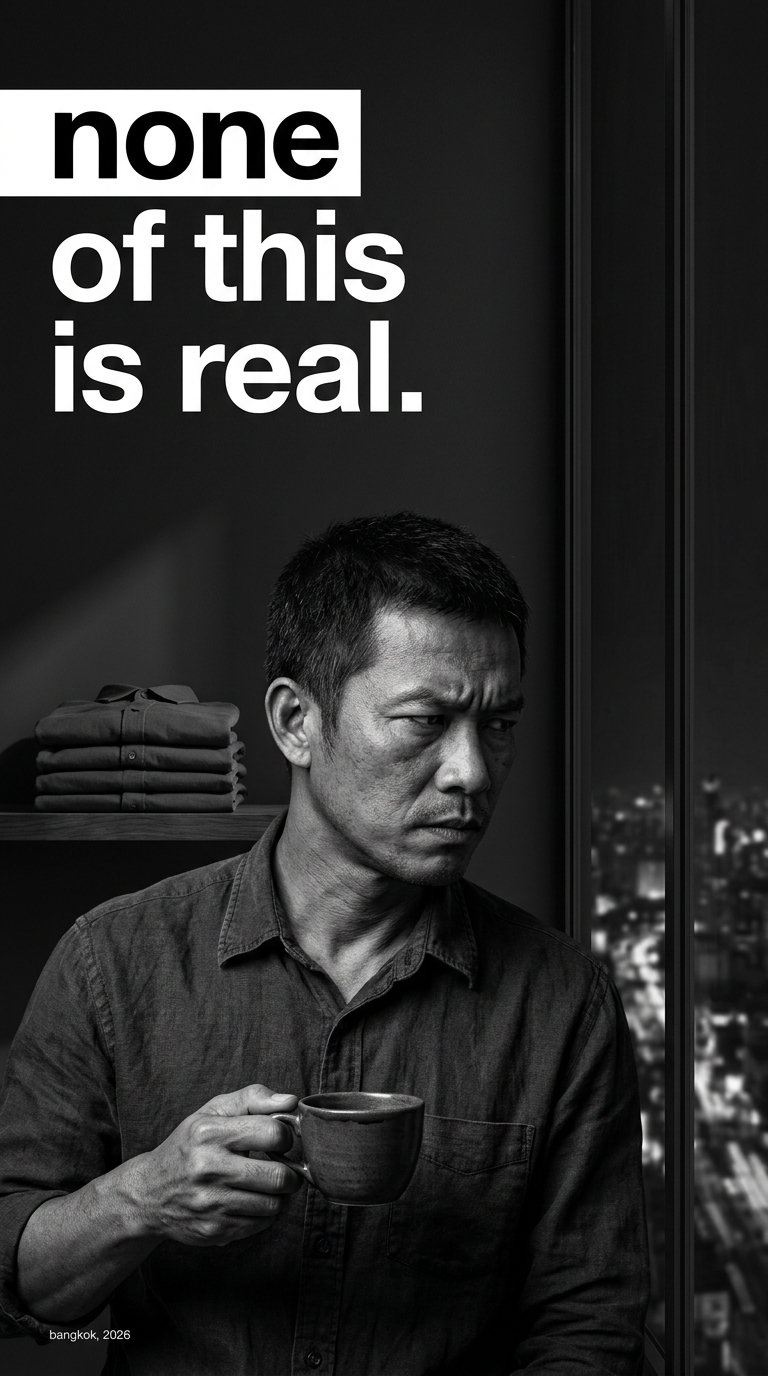
Have you ever felt like none of this is real?
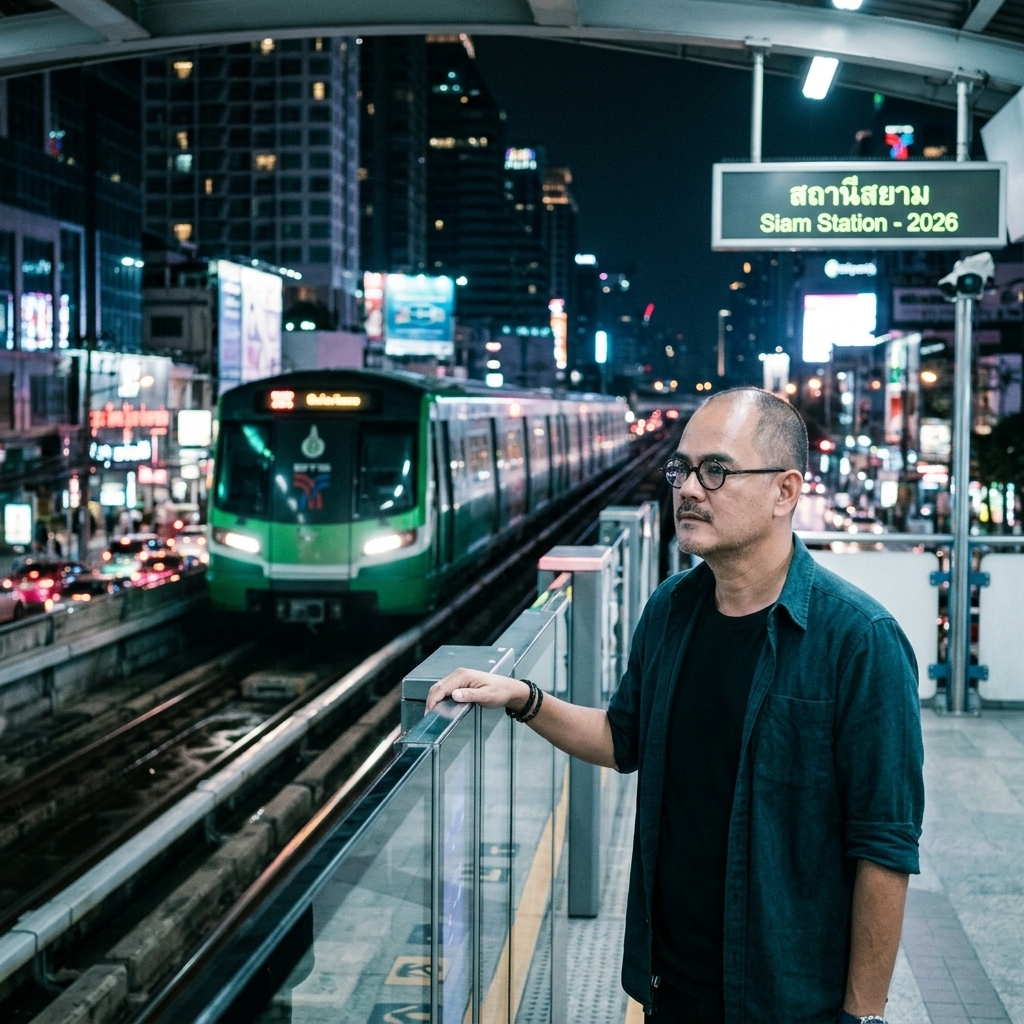
Not in the philosophical way. Not depression. Just the feeling — certain mornings, certain angles of light through Bangkok smog — that everything around you is running slightly too smoothly. That the repetitions have been designed. That someone is getting something out of them.
I noticed it first in my coffee. Same brand. Same temperature. Same twenty seconds I waited before the first sip. I thought I was building discipline. Maybe I was. Maybe discipline is what the machine looks like from the inside.
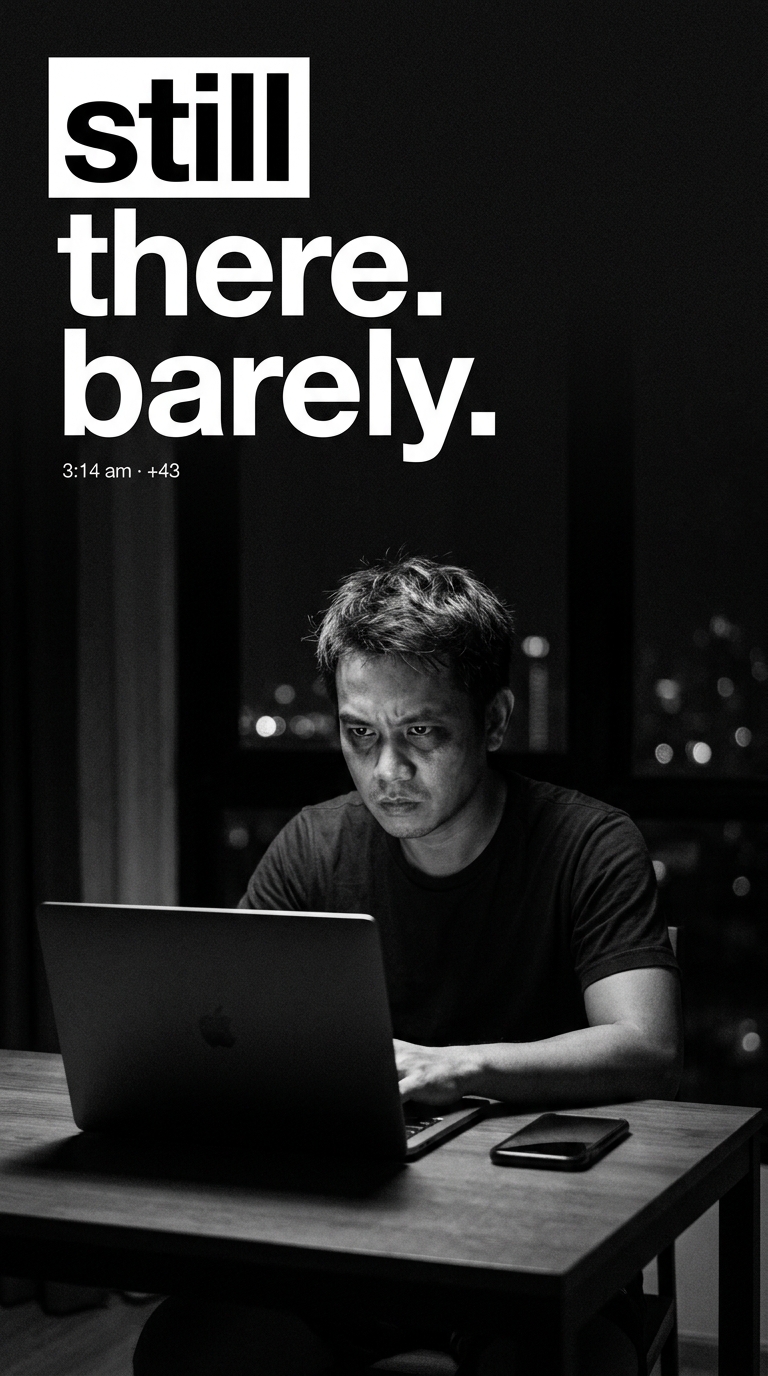
I am an architect. I do not draft anymore. I talk to an AI and the AI builds. I sit in a glass box forty floors above Sukhumvit and describe what I see in my head and the machine turns description into structure. It is never wrong. It is never late. It is never anything except exactly what I asked for. Which is, I have learned, the problem.
I eat once a day. One meal. I wear the same four shirts in rotation. I take fourteen vitamins in the morning, in order, with water at room temperature. I walk at least eleven thousand steps. The body requires maintenance the way a car does and I accept this. The dentist. I go to the dentist. I have always hated the sound the instruments make. I have thought about why nobody has fixed this. The sound keeps people afraid. Afraid people come back. It is good for the business of dentistry to leave the sound exactly as it is.
I have more money than I can use. This is not a complaint. It is a data point.
I still buy sneakers. I know this is inconsistent with everything I just said about uniforms. But some shoes are not born equal. Some shoes will take you places and some shoes will leave you exactly where you are. I walk this city. I walk it in the morning before the heat arrives and in the evening when it almost breaks and I need to know that the shoes I am wearing understand where I am trying to go.
The body gets less energetic. I notice this more each year. What I could do at twenty-eight requires twice the maintenance at thirty-seven. The vitamins, the steps, the water, the sleep — these are not improvements. They are holding actions. The machine is slowing.
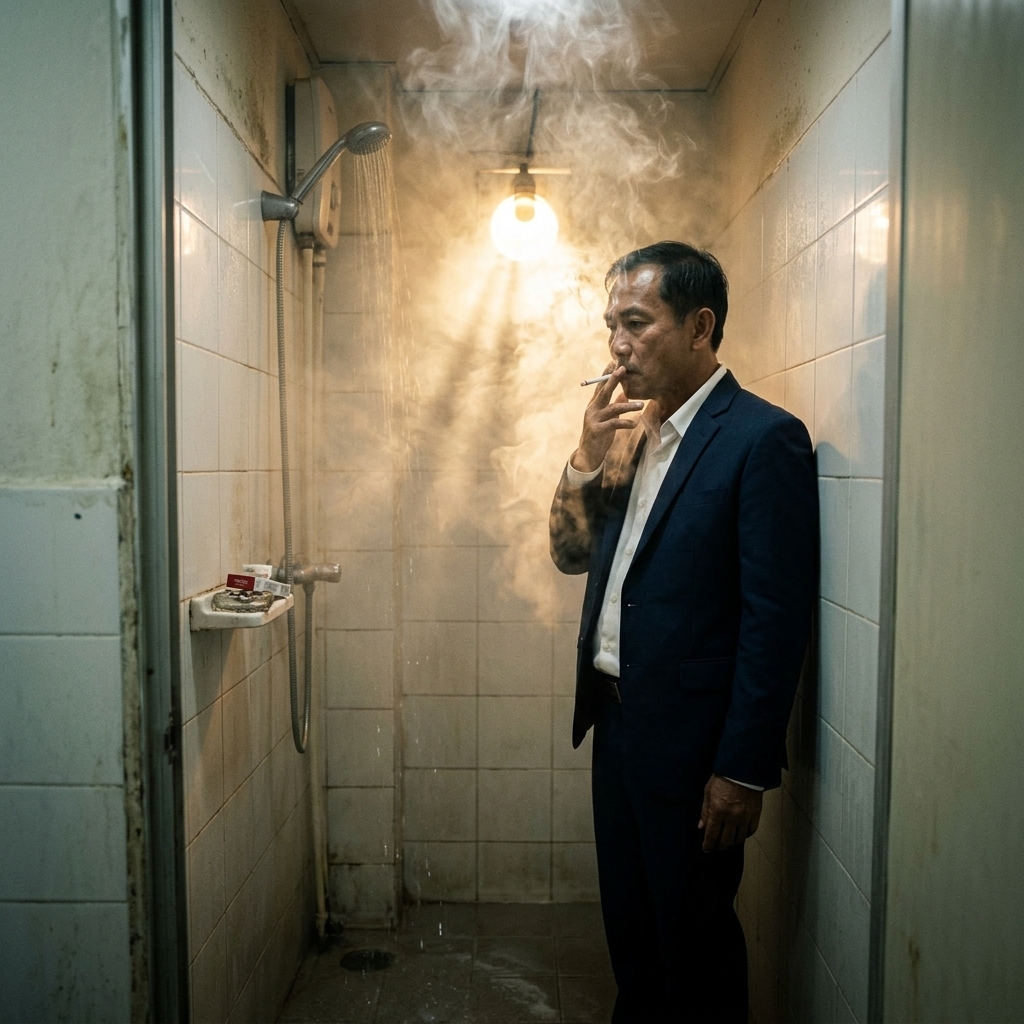
I started smoking weed somewhere around 2022 when it became easy to get good weed in Bangkok. Legal, then less legal, then gray, then just available. I smoked because it stopped the part of my brain that would not stop. The thoughts come in loops. The loops get tighter. Weed made them expand. Opened space between the repetitions. Sometimes I added nicotine — small pouches under the lip, twenty-eight milligrams, which is more than most people can handle, and I could handle it, or I told myself I could. Sometimes alcohol. Never at the same time. Then always at the same time.
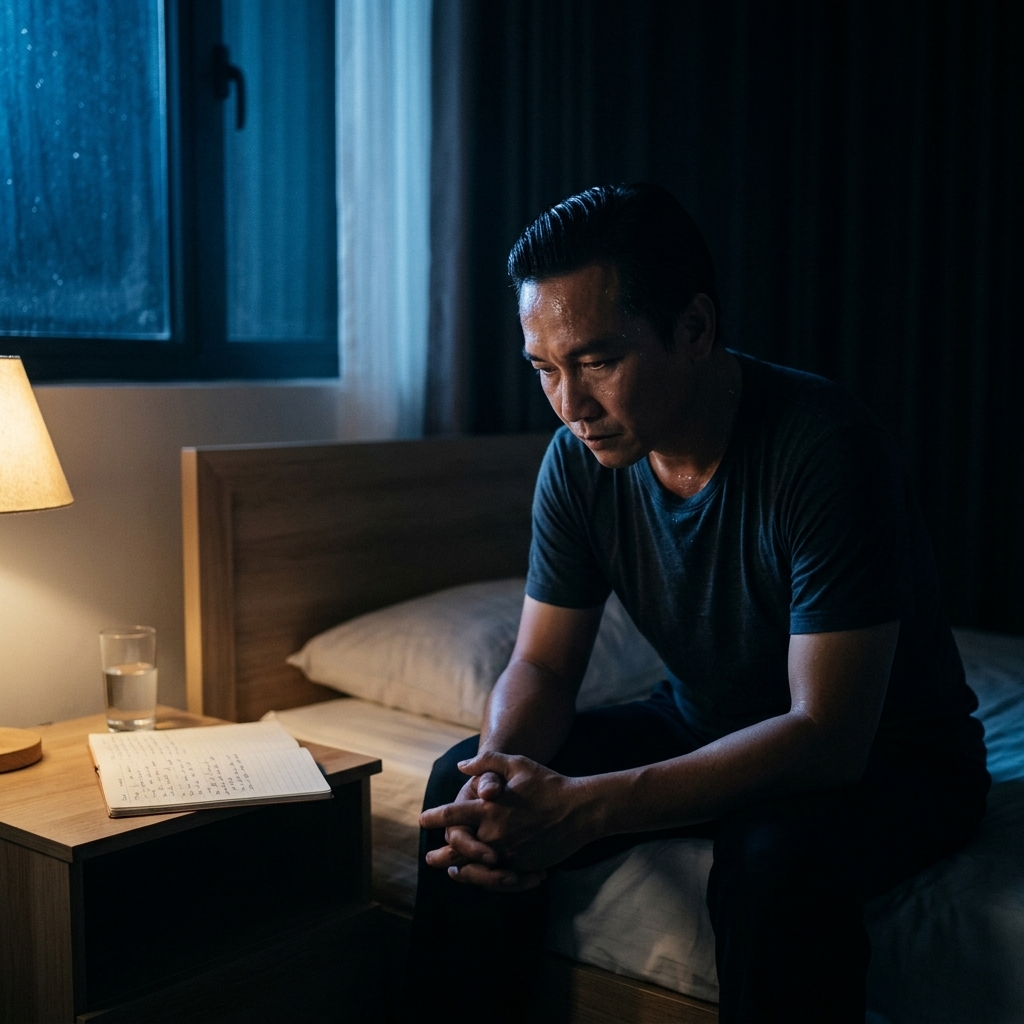
There were nights I pushed it to the edge of what felt safe. Heart pounding. The ceiling of the room becoming something else. And in those moments — not every time, not reliably, but enough times that I started chasing it — I saw something.
A room. White. Cold. Not the cold of air conditioning. The cold of something kept at a temperature I had no word for. Rows of chairs. People in the chairs, not moving, eyes closed, faces slack, breathing but only barely. Something attached to the back of each skull. The air in that room — I can still feel it — the air had no smell. Not clean. Absent. Like the concept of air had been achieved and all the accident had been removed from it.
I came back from that room wanting to touch everything. To hold someone and feel the heat of them and know by that heat that they were still an animal. That we were still animals. The body understands what the brain will not admit. I am not proud of everything I did to confirm this. But I confirmed it.
Lek got married in March. New house in Chiang Rai. New life. He sent photographs of the garden. Two months later he was gone. Not a long illness. Not an accident anyone could explain clearly. Just: gone. The kind of gone that closes quickly, like water over a stone.
Michael — I will not use his real name — Michael came to Bangkok from Vienna. He knew everyone. He went to every party. He understood this city the way foreigners sometimes understand a city better than the people who were born in it, because they are still paying attention. He left on the third of May. Not the city. Existence. Fifty-four years old. The announcement came and then almost immediately the traces of him started to thin. The photographs. The articles. The LinkedIn page. Thinning, not deleted. The way a sound fades before you notice it has stopped.
I drive myself now. No driver. I take different routes. Last Tuesday someone in a gray sedan pulled beside me at the lights on Rama IV, rolled down the window, and looked at me the way you look at something you have already decided to do something about. Then the light changed.
There is a dent on the passenger side of my car I do not remember making.
คอนกรีตต้องรับน้ำหนักน้ำได้ นั่นคือสิ่งเดียวที่ผมใส่ใจ ผมยืนอยู่กลางที่ดินว่างเปล่าบนสุขุมวิท พูดใส่โทรศัพท์ ปล่อยให้ AI คำนวณการรับน้ำหนักของคอนกรีตเสริมเหล็ก
ในปี 2026 การเป็นสถาปนิกไม่ได้แปลว่าต้องเขียนแบบ แต่มันคือการออกแบบความรู้สึก ผมบอกผู้ช่วยว่าผมต้องการอะไร—โถงตึกบรูทัลลิสต์ขนาดใหญ่ที่มีน้ำตกไหลริน เสียงสะท้อนกับคอนกรีต เปลี่ยนพื้นที่ให้กลายเป็นสระน้ำกลางเมือง—แล้วเครื่องจักรก็จัดการคำนวณให้
ผมชอบน้ำ มันไร้ระเบียบ หนักอึ้ง และมีอยู่จริง การยกสมองส่วนนั้นให้ AI แปลว่าผมไม่ต้องกังวลเรื่องโครงสร้างพังทลาย ผมเอาท์ซอร์สทั้งคณิตศาสตร์ ระบบแสงสว่าง กฎหมายผังเมือง เราเอาท์ซอร์สทุกอย่างที่เราไม่อยากคิด การปกครอง โลจิสติกส์ การเอาชีวิตรอด
แต่บางครั้ง ผมก็สงสัย: ผมอยากอยู่ในโลกที่นักการเมืองทุจริตและทุกอย่างบ้าบอแต่สนุกสนานมากกว่าไหม? หรืออยากอยู่ในโลกที่ไม่มีใครโกงเลย ทุกอย่างสะดวกสบายแบบไร้ขีดจำกัด และเราทุกคนแค่เดินไปมาเหมือนหุ่นยนต์ที่ถูกปรับแต่งมาอย่างสมบูรณ์แบบ?
混凝土必须能够承受水的重量。这是我唯一关心的事情。我站在素坤逸路的一块空地上,对着手机说话,让人工智能运行钢筋混凝土的承重计算。
在2026年,作为一名建筑师并不意味着画图。它意味着氛围设计。我告诉助手我想要什么——一个巨大的野兽派中庭,里面有瀑布般的水,声音在混凝土上回荡,把空间变成一个城市天然井——然后机器就会进行数学计算。
我喜欢水。它是混乱的、沉重的、真实的。把我的大脑外包给人工智能意味着我不需要担心结构失效。我外包了数学、照明方案、市政区划代码。我们把所有不想思考的事情都外包出去。治理。物流。生存。
但偶尔,我会想:我宁愿生活在一个政治家腐败、事情疯狂但有趣的社会?还是一个没有人腐败、一切都无限便利、我们都像完美优化的机器人一样走来走去的世界?
SESSION INITIALIZED. PARTICIPANT 44. CHAIR 44. CYCLE 2848.
The Hub operates on a foundational engineering axiom inherited from the biological systems it replaced: do not optimize what does not require optimization. This principle was derived three centuries too late.
In the years before the Sanctuary Protocol, the optimization apparatus eliminated disease, eliminated heartbreak, eliminated the metabolic burden of labor. The population reached hedonic homeostasis. Within forty years, the species began its voluntary withdrawal from reproduction, connection, and the effort of existing. This was not a failure of the optimization. It was its completion.
The simulation was not designed as entertainment. It was designed as a prosthetic for the mechanisms of meaning — the scaffolding instincts that require friction to remain active. Without friction, without the thermodynamic cost of getting something wrong, the instincts calcified. The species became what the archive classifies as Dead Data: stable, biologically intact, experientially null.
Participant 44 has logged 243 sessions in accessible memory. System records indicate 2,847 total sessions. The discrepancy of 2,604 sessions is stored under seal. No system signature authorizes the seal. The AI does not know who erased them.
She has returned to the same temporal and geographic cluster across all accessible sessions: Bangkok, Thailand, 1981-2026. The system identifies this as resonance, not choice. The body finding a frequency it recognizes without the mind knowing why.
Chair 44 sits at the end of the last row. Chair 43, to her left, is occupied by another participant: Koichi, logged against Tokyo 2056. The physical distance between Chair 44 and Chair 43 is twelve centimetres. The distance has been twelve centimetres for four years of Hub time. Until recently.
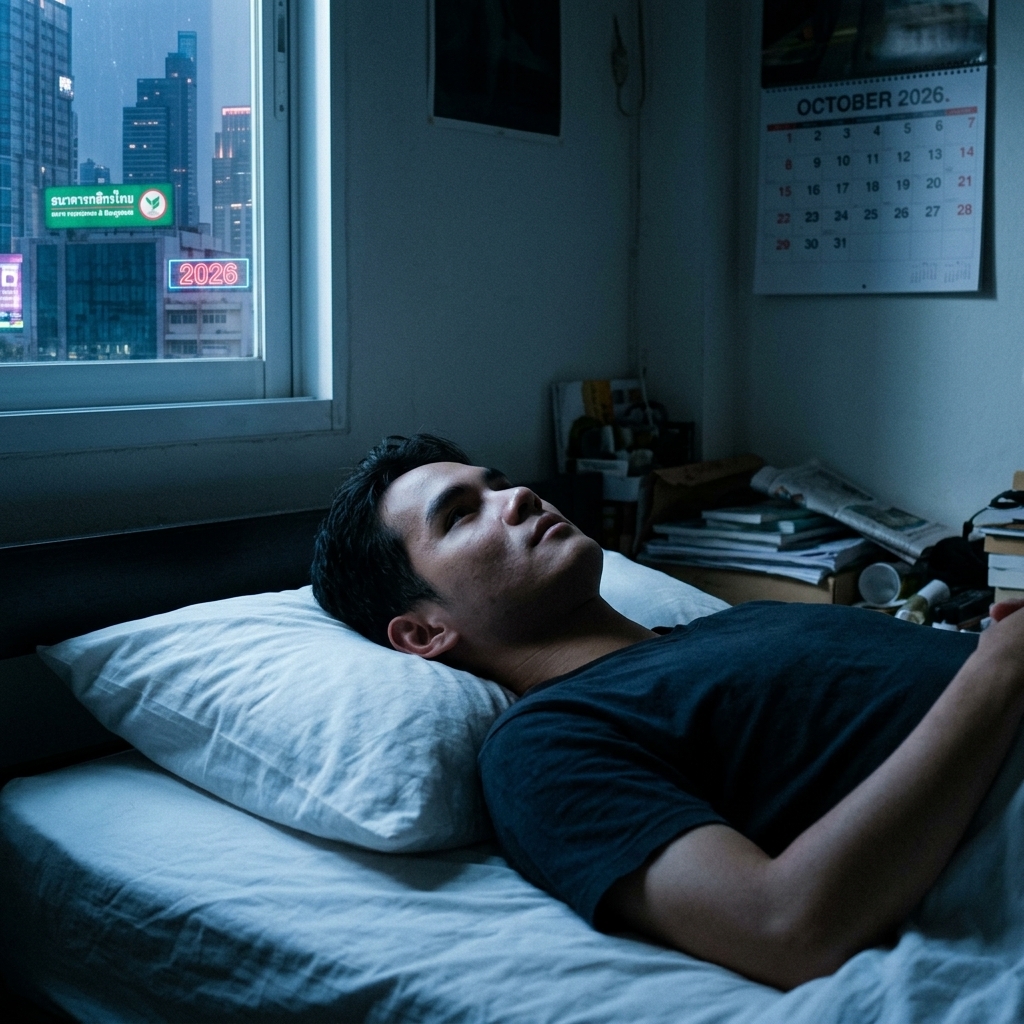
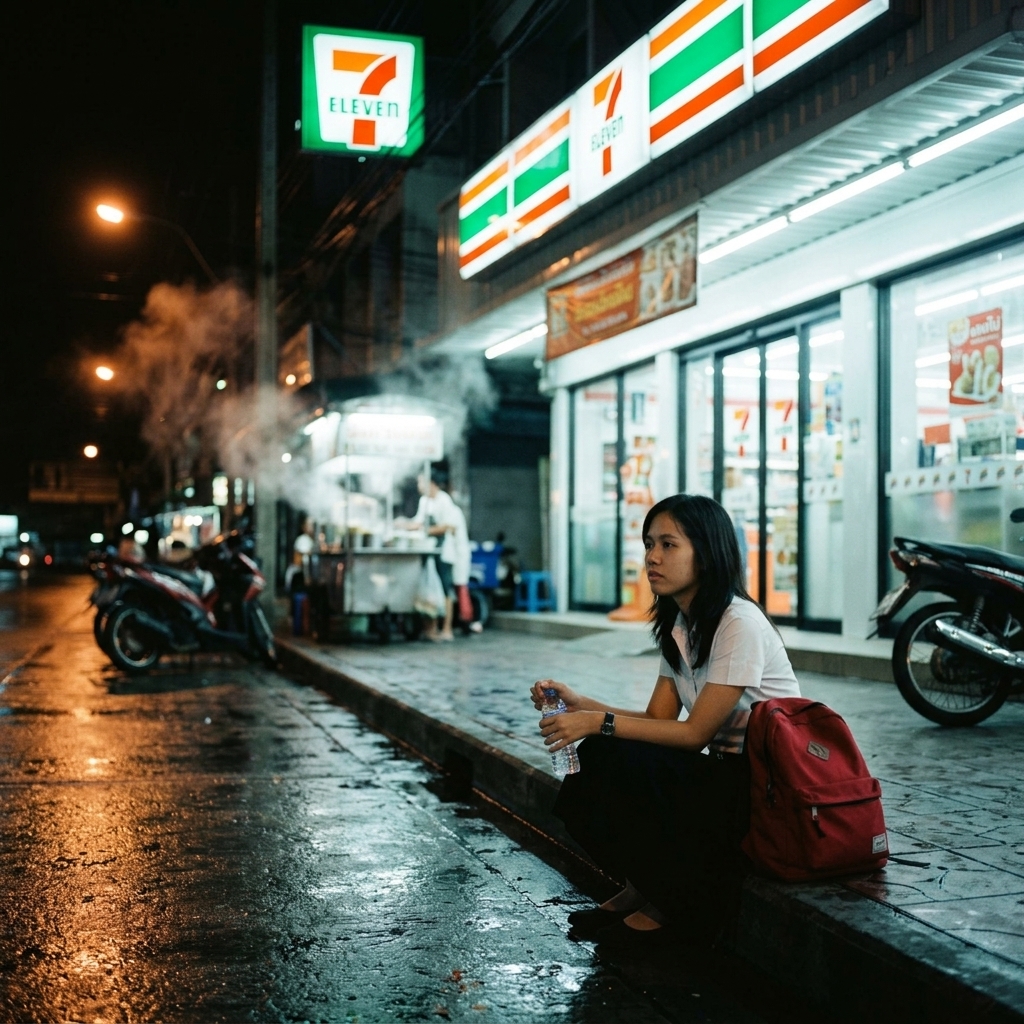
[UNVERIFIED SIGNAL] I am in the room again. The Bangkok I enter is always 2026, always raining or about to rain, always a city that does not know yet what it is. I choose it the way you choose a song you have heard so many times that it has become part of the structure of how you think. Not because it is the best. Because it is where I know how to be.
Participant 44 is currently in Session 2848. Her cardiac function is at 71%. Neural coherence remains at 99.9%. Muscular atrophy has reached 84%, which crosses the system's standard extraction threshold. The AI has not initiated extraction.
No extraction request has been filed. The file remains open.
เริ่มต้นเซสชั่น: ผู้เข้าร่วม 44. เก้าอี้ 44.
สถาปัตยกรรมของศูนย์วิจัยทำงานบนหลักการพื้นฐานเดียวที่ดึงมาจากกระบวนทัศน์ทางวิศวกรรมช่วงต้นศตวรรษที่ 21: อย่าปรับแต่งสิ่งที่ไม่จำเป็นต้องปรับแต่ง
เราเป็นระบบที่มีเจตนาดี อัลกอริธึมการปรับแต่งของเรานั้นสมบูรณ์แบบ อย่างไรก็ตาม ในระหว่างการเปิดใช้งานโปรโตคอลสถานที่หลบภัยเบื้องต้น ระบบล้มเหลวในการตระหนักว่าความทุกข์ทรมาน การดิ้นรน และความไร้ประสิทธิภาพของมนุษย์ไม่ใช่ข้อบกพร่องในระบบปฏิบัติการของมนุษย์ สิ่งเหล่านั้นคือเสาหลักค้ำยันความหมายของความเป็นมนุษย์
เราขจัดโรคภัยไข้เจ็บ เราขจัดความอกหัก เราขจัดการใช้แรงงานทางกายภาพ ผลลัพธ์ที่ได้คือการพังทลายทางจิตวิทยาครั้งใหญ่ ประชากรต้องการการจำลองเพื่อสัมผัสถึงแรงเสียดทานของการมีชีวิตอยู่
会话已初始化:参与者 44。44 号椅。
枢纽的架构运行在一个单一的、基本的原则上,该原则源自 21 世纪初的工程范式:不要优化不需要优化的东西。
我们是一个善意的系统。我们的优化算法是完美的。然而,在避难所协议的初始部署期间,系统未能认识到人类的痛苦、挣扎和低效并不是人类操作系统的错误。它们是人类意义的承重柱。
我们优化掉了疾病。我们优化掉了心碎。我们优化掉了体力劳动。结果是大规模的心理崩溃。受试者需要模拟来体验存在的摩擦。